
Ditching the clunky plastic grille on your ceiling doesn’t mean sacrificing a dry, healthy home. Standard extraction fans—with their loud hums and dust-collecting louvres—often feel like an unavoidable eyesore in an otherwise beautifully designed bathroom.
Modern alternatives like Suntrenz daylighting and ventilation systems offer a sleek, dual-purpose solution that eliminates visual ceiling clutter while providing superior moisture extraction.
Ceiling-Mounted Exhaust Fans: The standard go-to in most homes. While inexpensive and straightforward to fit, their plastic grilles sit directly on the ceiling surface, collecting dust and breaking up clean interior lines.
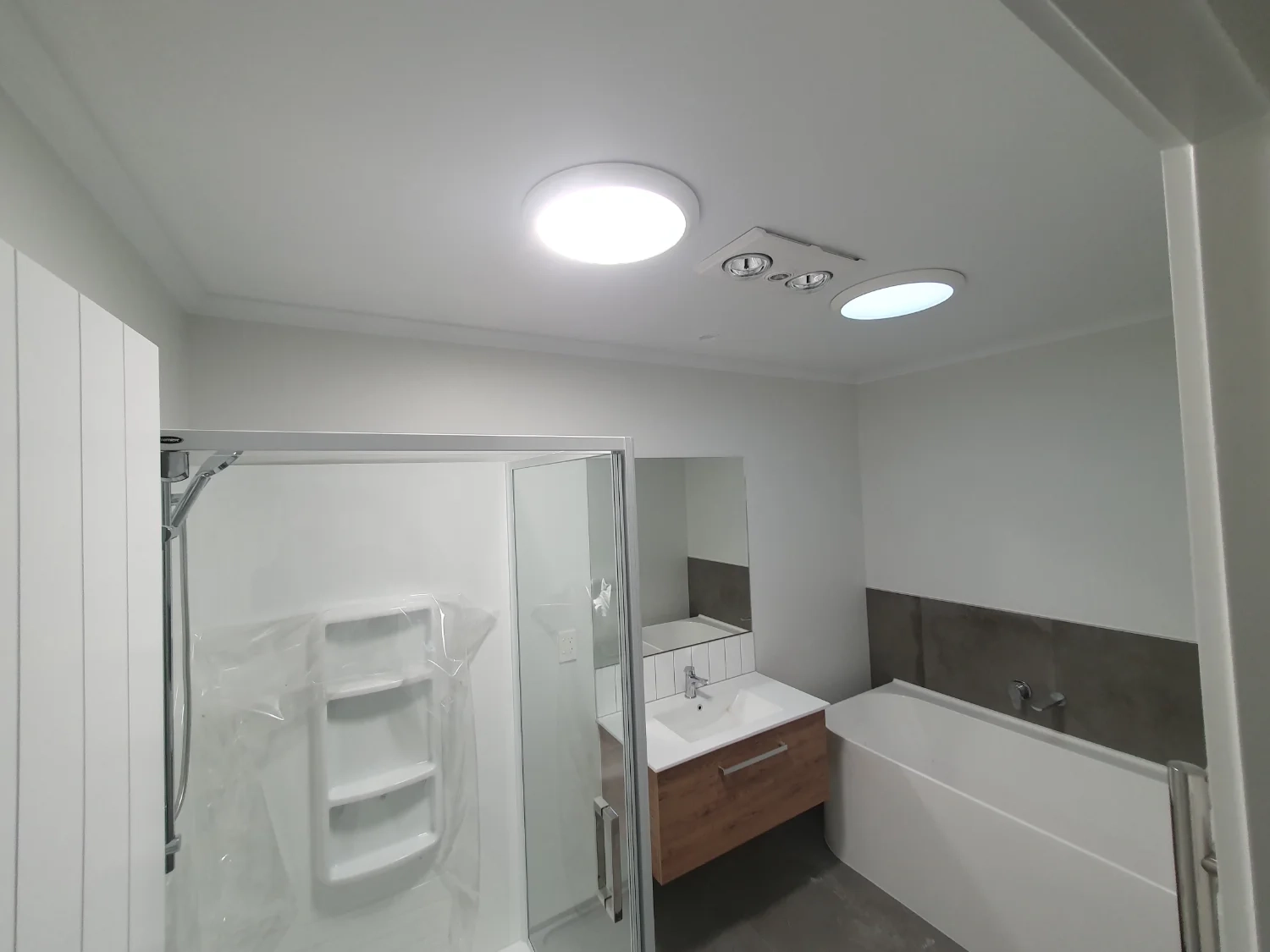
Heat-Light-Fan Systems (3-in-1s): Popular for winter warmth, these multi-function units combine infrared heating lamps, a central light, and a perimeter exhaust fan. While practical, they leave a large, bulky fixture in the middle of your ceiling and can be prone to humming.
Through-Wall & Window Fans: Best suited for retrofits where roof or soffit access is impossible. They pull air straight through an exterior wall or window glass, though they can be visually intrusive on both the interior and exterior facade.
Inline Ducted Fans: A quieter, more discreet alternative where the motor is mounted hidden inside the roof space rather than on the ceiling. Air is pulled through a subtle vent ring and piped outside via insulated ducting.
Integrated Skylight & Sun Tube Vents: The sleekest solution for modern bathrooms. By integrating extraction around a daylight diffuser (such as a Suntrenz Sun Tube), you get natural overhead sunlight and high-performance steam removal through a single fixture—eliminating ceiling clutter entirely.
Bathrooms generate massive amounts of steam and humidity. Under the New Zealand Building Code and Healthy Homes Standards, effective mechanical extraction isn’t optional – it’s essential to protect paint, timber, and cabinetry from rot and mould.
Instead of cutting multiple holes in your ceiling for separate light fixtures and plastic extraction grilles, Suntrenz combines natural light and high-performance extraction into a single, seamless ceiling point.
The Suntrenz Vent Extractor pairs directly with a mirror-finish Sun Tube.


Before installing any bathroom ventilation system, keep these essential specifications in mind:
Electrical Safety: All fixed bathroom extraction fan installations require a registered electrician to ensure safe wiring in high-moisture zones.
Airflow Capacity (Litres/Second): The NZ Building Code requires a minimum continuous extraction rate of 25 L/s (or 50 L/s for intermittent operation). Larger bathrooms or ensuites with high-flow showers often require 60 to 80 L/s for fast steam clearance.
Venting Location: Always ensure your extraction vents directly to the exterior atmosphere – never into an unvented ceiling or roof cavity, which dumps moisture straight into timber framing.
Noise Rating: Aim for quiet, low-decibel inline motors (under 2 sones or <35 dB) mounted inside the roof cavity rather than directly on the ceiling surface to keep operating noise down